
How to Clean a Pool Full of Leaves
Start with a Debris Check Around the Pool
Before cleaning, walk the deck and nearby planting areas to see where debris comes from. Look for leaves, pine needles, acorns, seed pods, and soil near the pool. Sweep loose debris away from the water so it won’t blow back in during cleanup. A windy coastal yard may refill the pool soon after you’ve skimmed it. A wooded Piedmont or Triangle property may collect leaves throughout the day. On sloped properties, rain can wash organic material toward the pool. Notice whether debris gathers around steps, in corners, or near a water feature. These patterns help you decide where to focus your routine. If you’re wondering how to keep leaves out of your pool, start with nearby debris sources. Thoughtful pruning, regular deck cleanup, and a suitable cover may reduce the workload.
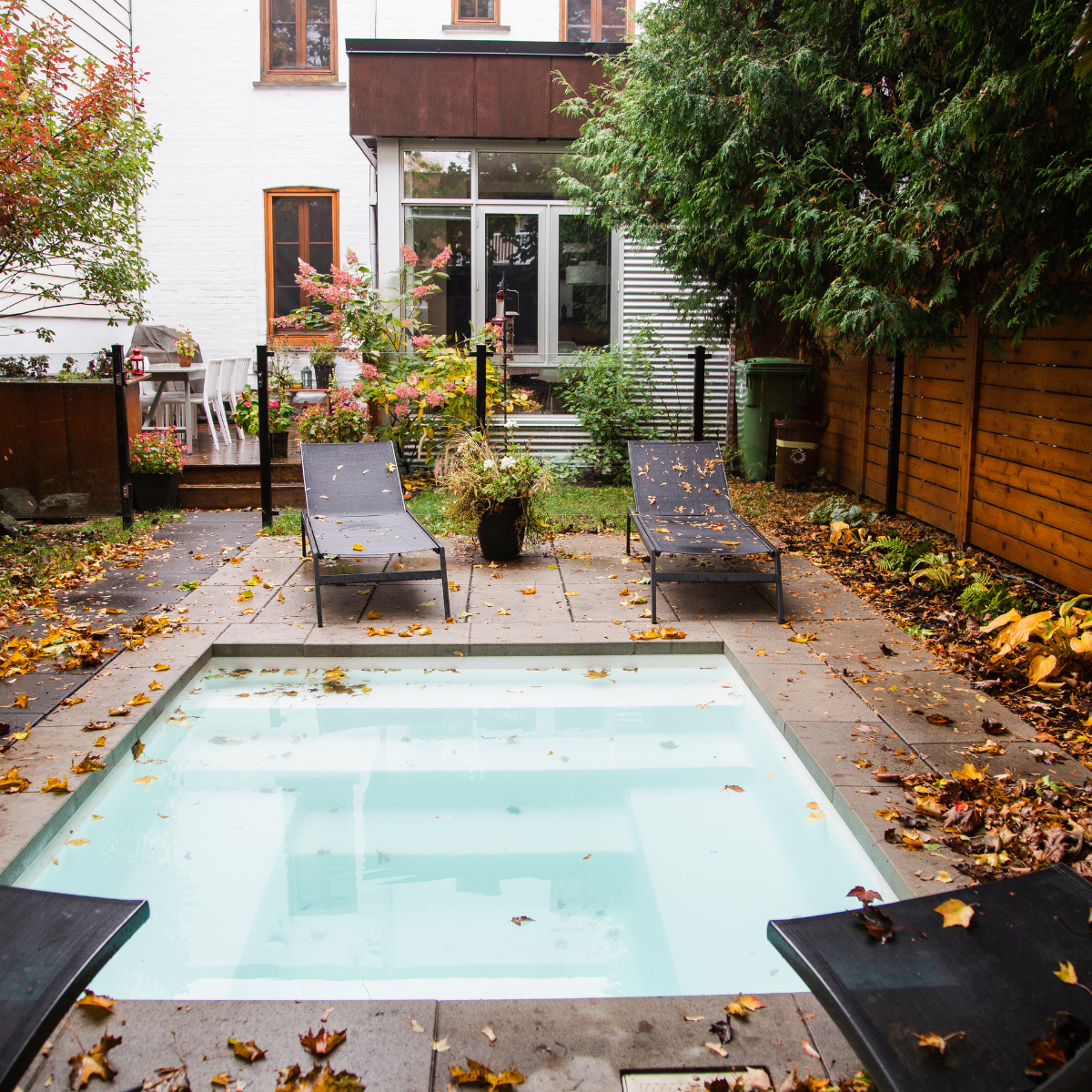
Protect Skimmers and Circulation from Fall Debris
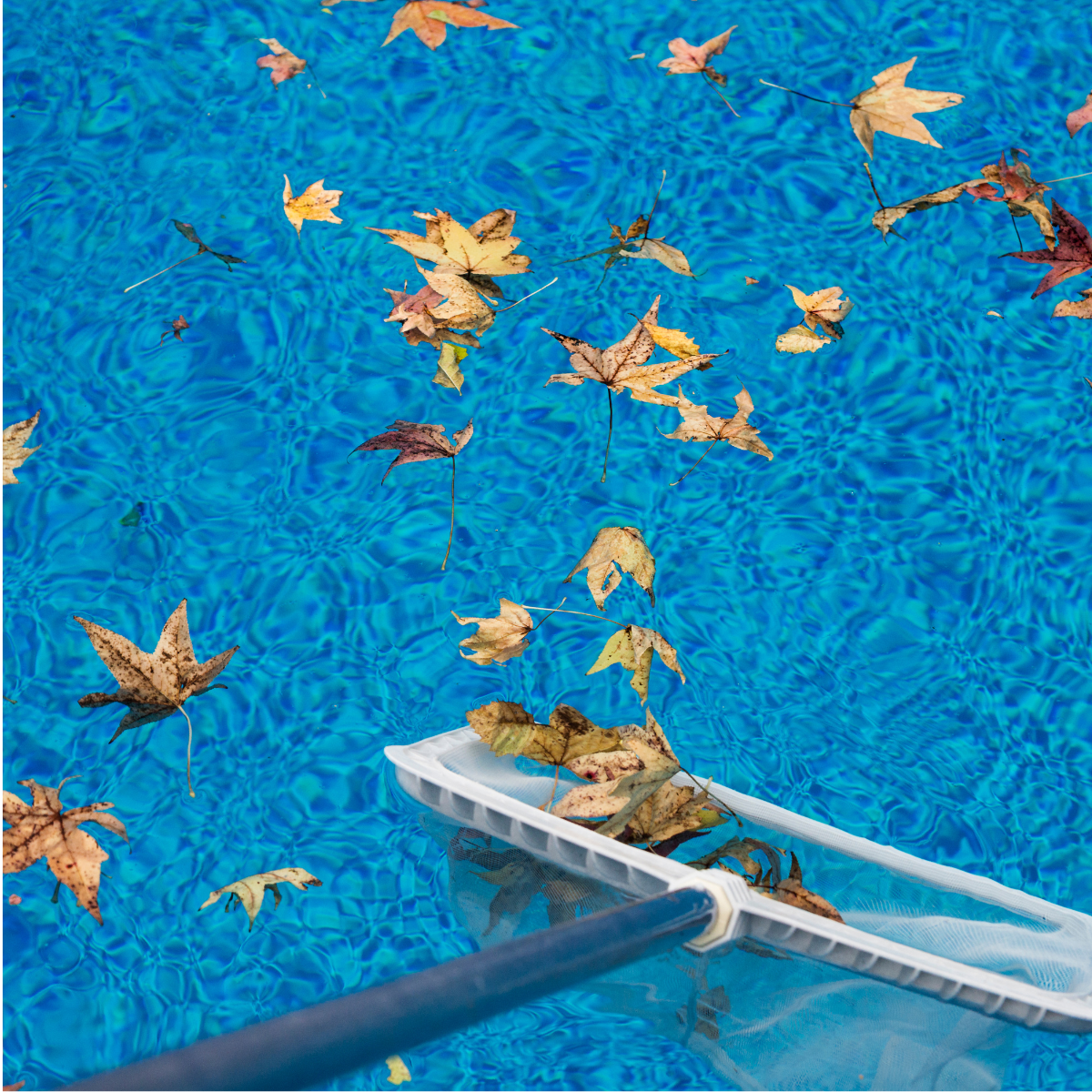
Leaves do more than make the surface look messy. They can fill skimmer baskets, restrict flow, and add organic material to the water. Pine needles and small debris may also collect in areas with weaker circulation. Check surface debris and skimmer baskets more frequently during heavy leaf drop. Windy weather, rain, and nearby yard work may call for an extra check. Don’t push leaf piles into the skimmer or rely on the filtration system to handle everything. Instead, remove large debris with a net before it reaches the baskets. Follow your equipment manufacturer’s instructions for basket and filter care. If water flow weakens or the pump makes unusual noises, ask a professional to investigate. For a broader seasonal routine, read our guide to fall pool care in North Carolina.
Manage Leaves Without Guessing at Water Chemistry
Removing leaves is an important first step, but clear-looking water still needs to be tested. Leaves and acorns can release tannins, which may discolor water or stain some pool surfaces. However, color alone won’t tell you what’s causing a water problem. Don’t add chemicals or stain treatments based on appearance alone. Test the water according to your established routine, and follow product labels and professional recommendations. If readings keep drifting, ask for help instead of making repeated large corrections. Water temperature, pool use, cover position, and your installed system can affect care needs. Keep simple notes about debris, test results, and changes in water appearance. Photos can also help your pool technician understand when a problem started. If cleanup and water care become difficult to manage, consider seasonal pool maintenance support.
Choose a Pool Cover That Fits Your Routine
A cover can reduce falling debris, but it can’t replace regular pool care. The right choice depends on pool shape, nearby trees, access, and how often you’ll use the water. Seasonal covers and automatic covers differ in how they operate and what maintenance they need. Safety performance also depends on the specific product and its installation. Don’t assume every cover provides the same protection. Ask your installer about compatibility, anchoring, drainage, and the manufacturer’s care requirements. You’ll also need a plan for removing leaves from the cover without damaging it. Consider whether your pool should stay open or close for winter before choosing a seasonal setup. Your winter plans will help guide the conversation about covers and ongoing care. A professional can explain which options suit your pool and property.
Use Fall Cleanup to Spot Repair Needs
Fall cleanup gives you a chance to notice problems that busy summer days may have hidden. Look for recurring stains, loose coping, damaged tile, or unusual water loss. Also note areas where leaves repeatedly collect or runoff brings soil toward the water. These observations don’t automatically mean your pool needs a major repair. They can, however, help a professional identify where closer inspection would be useful. Keep photos and dates with your cleaning notes so you can explain what you’ve noticed. Don’t open electrical panels, alter plumbing, or bypass equipment protections while investigating a problem. A maintenance visit may reveal a simple care adjustment or a repair that needs attention. If you’re considering larger improvements, discuss drainage, surface condition, and maintenance access together. That approach helps you prioritize work before the next busy swimming season.
Get a North Carolina Pool Maintenance Plan
Leaves are easier to manage when your cleaning routine fits your property, equipment, and schedule. If your pool needs constant cleanup or repeated water corrections, it’s time to discuss a seasonal plan. North Carolina Custom Pools offers routine cleaning, customized maintenance plans, repairs, and seasonal opening and closing services. Our team can help you understand which services fit your pool’s needs. Bring recent photos, water test results, and questions about cleaning frequency or cover care. Let us know whether you’ll keep using the pool or prepare for a quieter off-season. We can discuss service availability for your location and what’s included in your maintenance plan. You don’t have to manage every fall cleanup on your own. Contact North Carolina Custom Pools to request a pool maintenance consultation and discuss your next steps.
Share This Story, Choose Your Platform!
Recent Posts


Stay In the Know!
Stay up-to-date with the latest trends in pool design, maintenance tips, and exclusive offers by subscribing to our monthly newsletter.